
Automatic cartoning machine
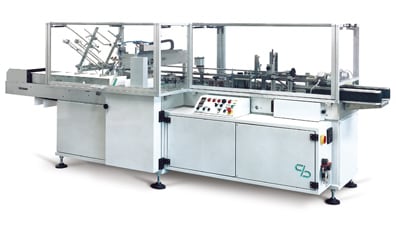
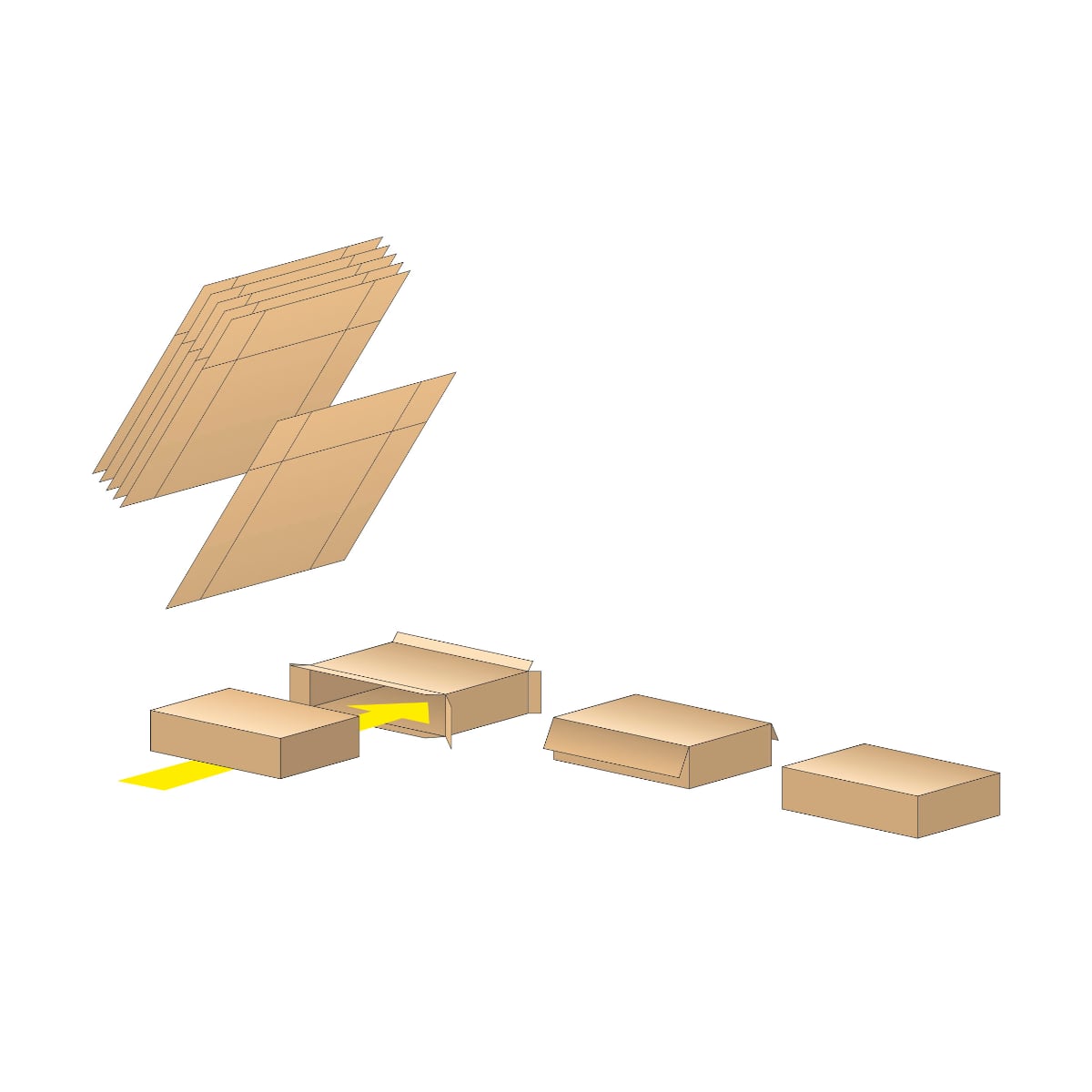
The horizontal cartoning machine model AS 220 automatically forms and closes boxes using pre-glued cartons. It essentially consists of an infeed conveyor with intermittent motion for product insertion, a carton magazine, and a second conveyor equipped with a device for inserting, folding and closing the box flaps. Product insertion on the conveyor can be either manual -carried out by an operator - or automatic by means of a synchronizing device.
Most of the groups the machine is made up with are adjustable, therefore on the occasion of a format change the operator does not need to replace all of them.
Description
- Mechanical and pneumatic operation
- Painted steel construction
- Adjustable bucket conveyor
- Infeed conveyor with adjustable pushers
- Carton magazine equipped with compacting device
- Alarm for detection of low level of cases in the magazine
- Alarm for boxes not open
- Box pick-up through sucker arm with Venturi system
- Arm for product insertion in the boxes equipped with safety system
- Mobile device for flap opening to ease product introduction
- No product-no carton feature
- Hot-melt glue closing or hook closing
- Handwheel and reference ruler for format change
- All parts in contact with the product are made of AISI 304 stainless steel
- Safety guards on all parts complying with CE normative
- Machine with CE marking
Video not available
To play the video, you must accept all cookies.
You can change your cookie preferences by clicking on the button below.
Manage Cookie Preferences
Ideal for the packaging of
Automatic cartoning machine: reliable packaging solutions
The use of a cartoning machine has become essential in modern packaging lines, especially in industries that require high-speed, precise, and reliable packaging solutions. Among the available packaging machinery options, CARTOMAC automatic cartoning machine stands out for its ability to streamline the process of forming, filling, and closing cartons with minimal manual intervention. An automatic cartoner machine is designed to handle a wide variety of products, from food items such as bars, snacks, and frozen foods, to non-food products including surgical masks and consumer goods. By integrating advanced mechanical and pneumatic systems, these machines can significantly reduce production time, minimize errors, and improve overall efficiency on the packaging floor.
A typical cartoner combines several key components, including an infeed conveyor, a carton magazine, and a device for flap folding and closure. The product can be inserted into the cartons either manually or automatically through a synchronizing mechanism, ensuring flexibility depending on the type of production line and product size. Most modern automatic cartoners feature adjustable components, which allow operators to make format changes quickly without replacing major machine parts. This adaptability is crucial for companies that produce multiple SKUs or need to adjust to seasonal packaging variations.
In addition to mechanical flexibility, automatic cartoning machines also prioritize safety and hygiene. All parts that come into contact with products are typically made of stainless steel, complying with food safety standards and facilitating easy cleaning. Not only: the advantages of implementing an automatic cartoner machine extend beyond speed and safety. By automating repetitive and labor-intensive tasks, companies can reallocate their workforce to higher-value activities, such as quality control and production planning. This not only increases operational efficiency but also reduces labor costs and the likelihood of human error. In industries with strict deadlines and high-volume production, such as organic food and automotive, the investment in an automatic cartoning machine often pays for itself in a short period through improved throughput and reduced waste.
In conclusion, automatic cartoners are highly versatile and can also be integrated into larger packaging lines to create a fully automated end-of-line solution. Investing in a cartoning machine - particularly a fully automatic cartoning machine - is a strategic choice for any company looking to enhance its packaging capabilities.
FAQ - AUTOMATIC CARTONING MACHINE
What is an automatic cartoning machine?
An automatic cartoning machine is an industrial packaging system designed to automatically erect, fill and close cardboard cartons. It is used in food and non-food industries to ensure efficient, precise and consistent secondary packaging operations.
What does a cartoning machine do?
A cartoning machine forms cartons from flat blanks, inserts products such as flow packs, sachets, pouches or trays, and then closes them using tuck-in flaps or glue. Its purpose is to automate the cartoning phase and increase productivity while reducing manual labor.
How does an automatic cartoning machine work?
An automatic cartoning machine works through synchronized mechanical movements controlled by servo motors and electronic systems. It picks a flat carton, erects it, inserts the product, and seals the carton in a continuous, high-speed process.
What is the working principle of a cartoning machine?
The working principle is based on a continuous or intermittent motion system that coordinates carton erection, product loading and carton closing. Precision timing ensures accurate product insertion and reliable sealing.
What is a cartoner used for?
A cartoner is used to package products into pre-glued cardboard cartons. It is commonly applied in food, pharmaceutical and consumer goods industries for secondary packaging.
What are the different types of cartoning machines?
Cartoning machines are generally divided into horizontal and vertical models, with either intermittent or continuous motion systems, depending on product type, speed requirements and production layout.
What is the difference between horizontal and vertical cartoning machines?
Horizontal cartoning machines load products from the side, making them ideal for flow packs or trays, while vertical machines load products from the top and are often used for loose or gravity-fed items.
What is the difference between cartoning and case packing?
Cartoning refers to placing products into individual retail cartons, whereas case packing involves grouping multiple cartons or products into larger shipping cases for transport and distribution.
What products can be packed with an automatic cartoning machine?
Automatic cartoning machines can handle a wide range of products, including food items, confectionery, bakery goods, frozen products, pouches, sachets and other primary packaged goods.
What are the advantages of using an automatic cartoning machine in food packaging?
They improve hygiene, reduce human contact, increase production speed and ensure consistent packaging quality, making them highly suitable for food packaging environments.
How many cartons per minute can an automatic cartoner produce?
Production speed depends on the model and configuration, but automatic cartoners can typically produce from several dozen up to hundreds of cartons per minute.
What are the main parts of a cartoning machine?
The main components include the carton magazine, carton erection system, product feeding unit, insertion mechanism, closing system and control panel.
How do I choose the right automatic cartoning machine?
The right machine depends on product type, carton size, required speed, available space and integration with existing packaging lines. A customized solution ensures optimal performance and efficiency.
Who manufactures automatic cartoning machines?
Companies specialized in packaging automation, such as CARTOMAC SRL, design and manufacture automatic cartoning machines tailored to different industrial sectors, for cardboard packaging solutions.